Article | What I learned in Supply Chain
A Very Brief History of Innovation in Modern US Trade
November 30th, 2021
6 minute read
Subscribe for more insights,
straight to your inbox
Every week, Mercado CEO Rob Garrison pens his latest learnings from the supply chain industry as part of an on-going series. Each article aims to share a little insight into what's going on that week, and to help foster discussion amongst industry professionals across levels, geographies, and companies.
Subscribe
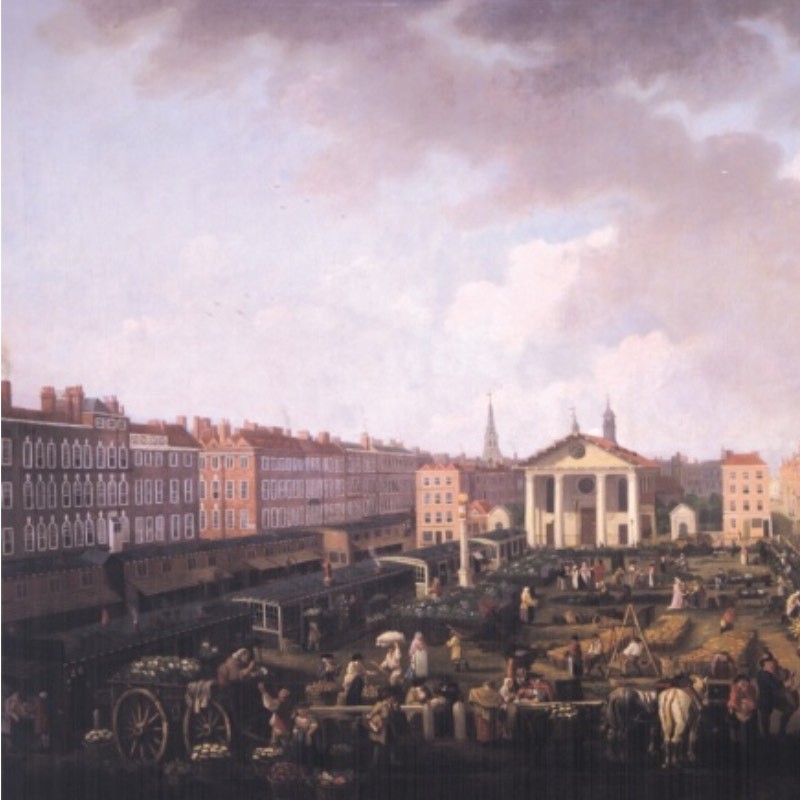
While barter is as old as human history, trade between nations began in earnest around the 16th century.
I
n 1776, Adam Smith wrote “The Wealth of Nations,” which advocated for trade without restriction as an economic premise.
The US trade history dates back to this time, and since the last century, the US has been one of the top 3 exporters and importers in the world.
In the late 60s, Pacific Trade began to rapidly accelerate, propelled by the invention of the container and newly emerging economies such as Japan, Hong Kong, Korea, and Taiwan. All four of these countries were democratic, and had significant US ties. The move abroad was led by companies such as Nike, Schwinn, Sears, and JCPenney, who were all early adopters and innovators at the time.
At the same time, modern international logistics also emerged, largely led by big carriers like APL, Sealand, and Maersk. The efficiency of containers led to other massive technology & innovation in logistics. In 1988 for example, APL was offering EDI Order Management, container tracking, double stack trains, and reliable, fast vessel service (21 days from Asia to NY). Their sales teams even had cell phones and Apple computers.
When China began to emerge and open in the 1980s, production from “the four dragons” began to move there to pursue abundant labor at lower costs. The factories were primarily led by managers of these former countries as China did not have the expertise.
What China did have, however, was a vision.
In many respects, it was rough sledding at the beginning as China did not have the infrastructure or technology to deal with the growth. But what they lacked in experience, they made up for with massive available labor pools and a series of 5-year plans including infrastructure. China is now working on their 14th 5-year plan.
The 80s also saw the introduction of the modern freight forwarder who provided a one-stop shop for importers. Companies like Fritz and Expeditors were innovators in the early days, providing complex solutions, a one stop shop, creating the capability for importers to be extremely agile.
In the late 60s, Pacific Trade began to rapidly accelerate, propelled by the invention of the container and newly emerging economies such as Japan, Hong Kong, Korea, and Taiwan. All four of these countries were democratic, and had significant US ties. The move abroad was led by companies such as Nike, Schwinn, Sears, and JCPenney, who were all early adopters and innovators at the time.
At the same time, modern international logistics also emerged, largely led by big carriers like APL, Sealand, and Maersk. The efficiency of containers led to other massive technology & innovation in logistics. In 1988 for example, APL was offering EDI Order Management, container tracking, double stack trains, and reliable, fast vessel service (21 days from Asia to NY). Their sales teams even had cell phones and Apple computers.
When China began to emerge and open in the 1980s, production from “the four dragons” began to move there to pursue abundant labor at lower costs. The factories were primarily led by managers of these former countries as China did not have the expertise.
What China did have, however, was a vision.
In many respects, it was rough sledding at the beginning as China did not have the infrastructure or technology to deal with the growth. But what they lacked in experience, they made up for with massive available labor pools and a series of 5-year plans including infrastructure. China is now working on their 14th 5-year plan.
The 80s also saw the introduction of the modern freight forwarder who provided a one-stop shop for importers. Companies like Fritz and Expeditors were innovators in the early days, providing complex solutions, a one stop shop, creating the capability for importers to be extremely agile.
“The current situation is not sustainable — either on a financial or operational level."

Rob Garrison
Mercado CEO
Mercado CEO
Over time, importing had become almost a “set it and forget it” type of thing.
Today, 225,000 importers purchase $2.4T worth of inventory with approximately half coming from Asia. With modern ports, vessels, technology, and increasingly sophisticated manufacturing, the global supply chain has become one of the largest businesses almost no one knew existed.
All of that reliability got tossed up in the air approximately 3 years ago. Political winds changed, trade wars ensued, tariffs were implemented, and the new normal became volatility. Then came the pandemic, and now the resulting supply chain crisis.
The current situation is not sustainable — either on a financial or operational level.
Today, 225,000 importers purchase $2.4T worth of inventory with approximately half coming from Asia. With modern ports, vessels, technology, and increasingly sophisticated manufacturing, the global supply chain has become one of the largest businesses almost no one knew existed.
All of that reliability got tossed up in the air approximately 3 years ago. Political winds changed, trade wars ensued, tariffs were implemented, and the new normal became volatility. Then came the pandemic, and now the resulting supply chain crisis.
The current situation is not sustainable — either on a financial or operational level.

About the author(s)
About the Series
Each week, Mercado CEO Rob Garrison pens his latest learnings from the supply chain industry as part of a series run for his LinkedIn followers. Each article aims to share a little insight into what's going on that week and to help foster discussion amongst industry professionals across levels, geographies, and companies.
You can connect with Rob on LinkedIn by following this link.
Each week, Mercado CEO Rob Garrison pens his latest learnings from the supply chain industry as part of a series run for his LinkedIn followers. Each article aims to share a little insight into what's going on that week and to help foster discussion amongst industry professionals across levels, geographies, and companies.
You can connect with Rob on LinkedIn by following this link.
Create a digital first mile for your business
To learn more about how you can create a connected and automated global supply chain, talk to an expert at Mercado. Book a demo or reach out to one of our team with questions.
Talk to the team